Lazos: Connecting Generations
Designing an intergenerational mentorship experience that connects students and retired professionals through career guidance, social connections and knowledge exchange.
My Role: UX Researcher & UX/UI Designer
Project: UX Postgraduate Final Project — Senac EAD (Grade: 9.5/10)
Location: Murcia, Spain
Duration: ~4 weeks
Methods: User Research · Competitive Analysis · Ideation · Wireframing · Usability Testing · UI Design · Prototyping Tools: Figma · Framer · Claude
Senior Version: https://claude.ai/public/artifacts/e3e796ab-dcee-4f74-8b14-c426f0b1e372
Student Version: https://claude.ai/public/artifacts/b9f11df7-4c87-4c01-8953-62613564a3aa
About the project
Lazos connects students and retired professionals from the same field, helping young people reduce pre-career anxiety and giving seniors a renewed sense of purpose: a common concern given rising social isolation among older adults.
The challenge
How might we connect two generations with different needs, routines, and expectations through a meaningful mentorship experience?
Students have academic knowledge but limited access to real-world professional experience. Retired professionals have valuable knowledge they want to keep sharing.
I saw an opportunity to turn these two needs into one mutually beneficial product.
Grounding the problem
Before designing anything, I looked at local data to validate the problem was real, not assumed:
Active aging: INE (Spain's national statistics institute) data shows Murcia has one of the country's most pronounced active-aging demographics.
Undesired solitude: Fundación "la Caixa" (2020) identifies unwanted solitude among seniors as a public health issue in Spain = isolation isn't just about contact, but about the loss of an active social role.
Student population: UMU, UCAM, and Erasmus students in Murcia exceed 50,000, with pre-career anxiety documented by university counseling services.
Research
I conducted exploratory research with both audiences:
10 retired professionals
18 university students
Exploring what would motivate someone to mentor, what would make a student trust a mentor, realistic time commitments, and what information users needed before connecting.
Adapting the research
My original plan involved recruiting through universities and senior centers.
GDPR requirements and lengthy authorization processes made that unworkable within a 4-week timeline.
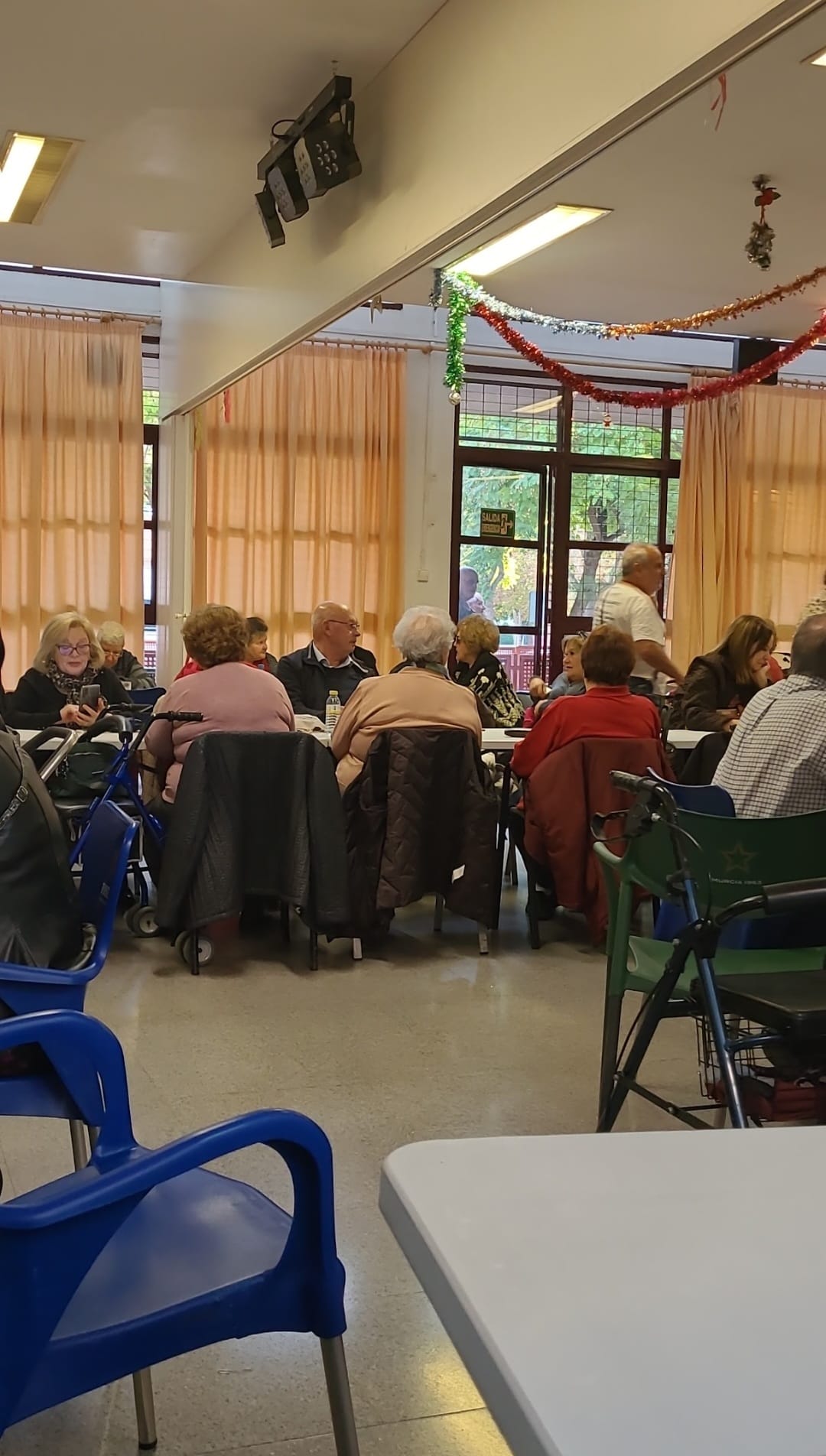
I pivoted to convenience sampling: senior participants through trusted personal connections at a bingo hall, and students through personal networks and Erasmus Facebook groups.
Lesson: a good methodology needs to be rigorous, but also adaptable to real-world constraints.
Key insights
Research revealed two very different definitions of value:
Retired professionals wanted to share knowledge, feel useful, and maintain social connection (in short, focused sessions that fit their routine).
They were split 50/50 on mentoring one student deeply vs. several at once, and asked for extra features like brain games and discussion forums.
Students cared about career development, practical advice, and trustworthy mentor profiles (a mentor's background, career history, and photo mattered as trust signals).
72% preferred a free, ad-supported version over paid subscriptions.
Designing for two audiences
Rather than forcing one interaction model on both groups, I adapted the experience to each:
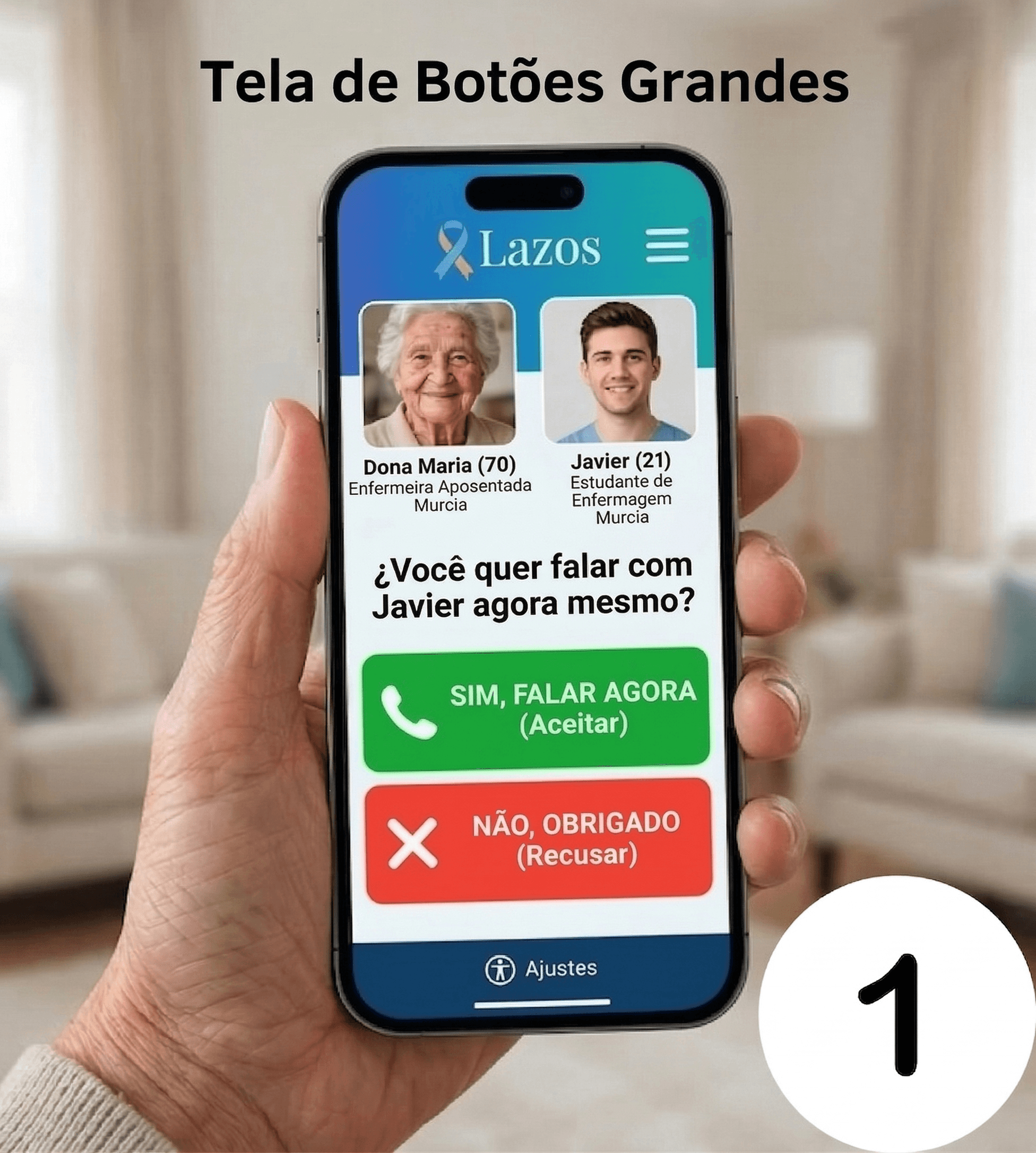
Retiree experience: simple, visible, focused: larger touch targets, fewer decisions per screen, lower information density.
Student experience: informative, detailed, flexible: more information upfront, especially mentor credibility.
This became a core accessibility principle for the project: accessibility isn't always about giving everyone the same experience. It can mean adapting the experience to different needs.
From sketches to prototype
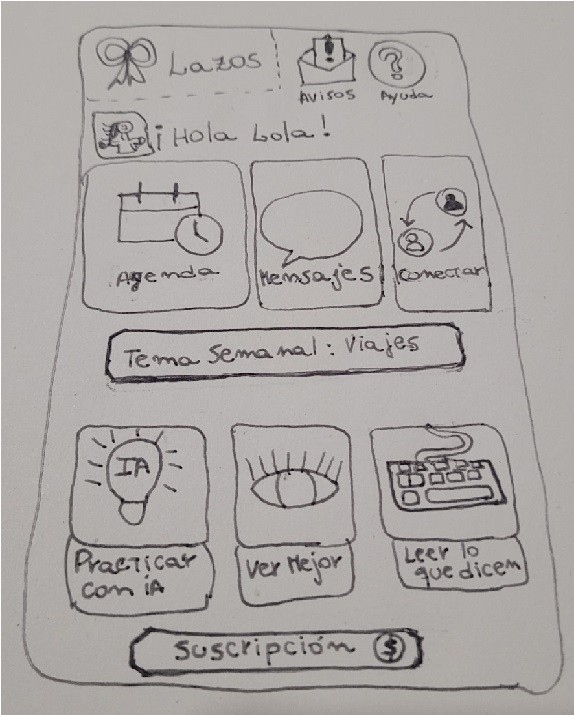
I moved through: Sketches → Wireframes → Visual Concepts → Usability Testing → High-Fidelity Prototype, testing two visual directions with both audiences before finalizing the interface.
What testing changed
Retirees: 98% preferred the simpler visual direction, with larger buttons and fewer elements.
Students: 79% preferred the version with more information upfront about the mentor.
These results directly shaped the final UI and confirmed the decision to run two information densities inside one product ecosystem.
Final experience
For retired professionals — large touch targets, clear actions, simple navigation, reduced information density.
For students — richer information earlier in the journey, especially mentor credibility and professional background.
Reflection
Lazos taught me that designing for different generations requires more than simplifying an interface, it requires understanding different motivations, routines, and definitions of value.
This project strengthened my interest in UX Research, accessibility, and inclusive product design: taking a concept from an initial problem through research, testing, and a high-fidelity prototype.
What I'd validate next
With a longer timeline and fewer bureaucratic constraints, I would expand the work in three directions:
Deeper qualitative research: More in-depth interviews with both profiles to refine the empathy maps further, overcoming the initial access barriers at senior centers and care homes.
National scalability: Testing whether the model extends beyond Murcia to other Spanish regions with similar demographics.
Multilingual expansion: Adapting the service for other languages, so the intergenerational exchange could also support foreign-language practice across borders.
Role: UX Researcher & UX/UI Designer
Grade: 9.5/10
Location: Murcia, Spain
Duration: ~4 weeks
Methods: User Research · Competitive Analysis · Ideation · Wireframing · Usability Testing · UI Design · Prototyping
Thank you for exploring Lazos!
This project reinforced my belief that good UX starts with understanding people (especially when their needs, expectations, and abilities are different).
I’m particularly interested in creating clear, accessible, and human-centered experiences where research directly informs design decisions.
I’d love to connect and talk about how I could contribute to your next product or team.
Lazos: Connecting Generations
Designing an intergenerational mentorship experience that connects students and retired professionals through career guidance, social connections and knowledge exchange.
My Role: UX Researcher & UX/UI Designer
Project: UX Postgraduate Final Project — Senac EAD (Grade: 9.5/10)
Location: Murcia, Spain
Duration: ~4 weeks
Methods: User Research · Competitive Analysis · Ideation · Wireframing · Usability Testing · UI Design · Prototyping Tools: Figma · Framer · Claude
Senior Version: https://claude.ai/public/artifacts/e3e796ab-dcee-4f74-8b14-c426f0b1e372
Student Version: https://claude.ai/public/artifacts/b9f11df7-4c87-4c01-8953-62613564a3aa
About the project
Lazos connects students and retired professionals from the same field, helping young people reduce pre-career anxiety and giving seniors a renewed sense of purpose: a common concern given rising social isolation among older adults.
The challenge
How might we connect two generations with different needs, routines, and expectations through a meaningful mentorship experience?
Students have academic knowledge but limited access to real-world professional experience. Retired professionals have valuable knowledge they want to keep sharing.
I saw an opportunity to turn these two needs into one mutually beneficial product.
Grounding the problem
Before designing anything, I looked at local data to validate the problem was real, not assumed:
Active aging: INE (Spain's national statistics institute) data shows Murcia has one of the country's most pronounced active-aging demographics.
Undesired solitude: Fundación "la Caixa" (2020) identifies unwanted solitude among seniors as a public health issue in Spain = isolation isn't just about contact, but about the loss of an active social role.
Student population: UMU, UCAM, and Erasmus students in Murcia exceed 50,000, with pre-career anxiety documented by university counseling services.
Research
I conducted exploratory research with both audiences:
10 retired professionals
18 university students
Exploring what would motivate someone to mentor, what would make a student trust a mentor, realistic time commitments, and what information users needed before connecting.
Adapting the research
My original plan involved recruiting through universities and senior centers.
GDPR requirements and lengthy authorization processes made that unworkable within a 4-week timeline.
I pivoted to convenience sampling: senior participants through trusted personal connections at a bingo hall, and students through personal networks and Erasmus Facebook groups.
Lesson: a good methodology needs to be rigorous, but also adaptable to real-world constraints.
Key insights
Research revealed two very different definitions of value:
Retired professionals wanted to share knowledge, feel useful, and maintain social connection (in short, focused sessions that fit their routine).
They were split 50/50 on mentoring one student deeply vs. several at once, and asked for extra features like brain games and discussion forums.
Students cared about career development, practical advice, and trustworthy mentor profiles (a mentor's background, career history, and photo mattered as trust signals).
72% preferred a free, ad-supported version over paid subscriptions.
Designing for two audiences
Rather than forcing one interaction model on both groups, I adapted the experience to each:
Retiree experience: simple, visible, focused: larger touch targets, fewer decisions per screen, lower information density.
Student experience: informative, detailed, flexible: more information upfront, especially mentor credibility.
This became a core accessibility principle for the project: accessibility isn't always about giving everyone the same experience. It can mean adapting the experience to different needs.
From sketches to prototype
I moved through: Sketches → Wireframes → Visual Concepts → Usability Testing → High-Fidelity Prototype, testing two visual directions with both audiences before finalizing the interface.
What testing changed
Retirees: 98% preferred the simpler visual direction, with larger buttons and fewer elements.
Students: 79% preferred the version with more information upfront about the mentor.
These results directly shaped the final UI and confirmed the decision to run two information densities inside one product ecosystem.
Final experience
For retired professionals — large touch targets, clear actions, simple navigation, reduced information density.
For students — richer information earlier in the journey, especially mentor credibility and professional background.
Reflection
Lazos taught me that designing for different generations requires more than simplifying an interface, it requires understanding different motivations, routines, and definitions of value.
This project strengthened my interest in UX Research, accessibility, and inclusive product design: taking a concept from an initial problem through research, testing, and a high-fidelity prototype.
What I'd validate next
With a longer timeline and fewer bureaucratic constraints, I would expand the work in three directions:
Deeper qualitative research: More in-depth interviews with both profiles to refine the empathy maps further, overcoming the initial access barriers at senior centers and care homes.
National scalability: Testing whether the model extends beyond Murcia to other Spanish regions with similar demographics.
Multilingual expansion: Adapting the service for other languages, so the intergenerational exchange could also support foreign-language practice across borders.
Role: UX Researcher & UX/UI Designer
Grade: 9.5/10
Location: Murcia, Spain
Duration: ~4 weeks
Methods: User Research · Competitive Analysis · Ideation · Wireframing · Usability Testing · UI Design · Prototyping
Thank you for exploring Lazos!
This project reinforced my belief that good UX starts with understanding people (especially when their needs, expectations, and abilities are different).
I’m particularly interested in creating clear, accessible, and human-centered experiences where research directly informs design decisions.
I’d love to connect and talk about how I could contribute to your next product or team.